
The Missing Names from Scarborough Cricket Club's War Memorial
Two members who made the ultimate sacrifice

In the wake of the rediscovery of the Scarborough Cricket Club War Memorial, further research has been taking place into the men named on the memorial, which has uncovered two club members who were overlooked when the memorial was made in 1920.
Scarborough Cricket Club life member Fred Fox has discovered two men who should have been on the memorial. Given the huge loss of life during World War One, it is understandable that there are errors and omissions on the thousands of memorials scattered across Britain and her former Empire. Here we tell the story of two Scarborough Cricket Club Members who were missed off the club’s recently rediscovered memorial. It is hoped that an addenda plaque can be placed next to the memorial when it is re-erected.
Frank Leslie Royle
Lined with red bricked terraced houses, Queen Street winds its way from the heights of Castle Road towards Newborough; Scarborough’s main shopping thoroughfare. It was on this narrow street, at number 16, that Frank Leslie Royle was born; the youngest son of the Scarborough solicitor George Royle.
Before the outbreak of war in 1914, Frank moved to Leeds, where he was employed in a clerical and medical insurance office. However, he retained his membership of Scarborough Cricket Club. Frank returned to Scarborough in October 1915 to enlist in the 4th Battalion of the Yorkshire Regiment, later transferring to the 10th Battalion, he became a lance corporal and instructor of signalling.
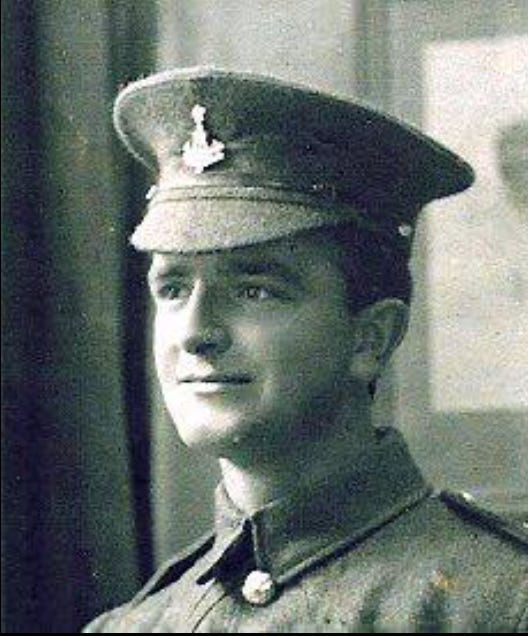
Lance Corporal Frank Leslie Royle, image courtesy of The Lloyds Banking Group Virtual War Memorial
In December 1915 he left for France. He was reported wounded and missing in April 1917, whilst serving as a signaller in the Yorkshire Regiment.1 His battalion had on 11 April 1917 carried out an attack on the Hindenburg Line. Due to the intact and thick barbed wire, which had not been cut by the preceding artillery bombardment, the attack failed, resulting in 120 men of the battalion being killed or wounded. It is possible that this was when Frank received his fatal wounds. In early May his father was officially notified that his son had died of wounds on 12 April 1917.2 He was subsequently buried at the Boyelles Communal Cemetery Extension south of Arras.
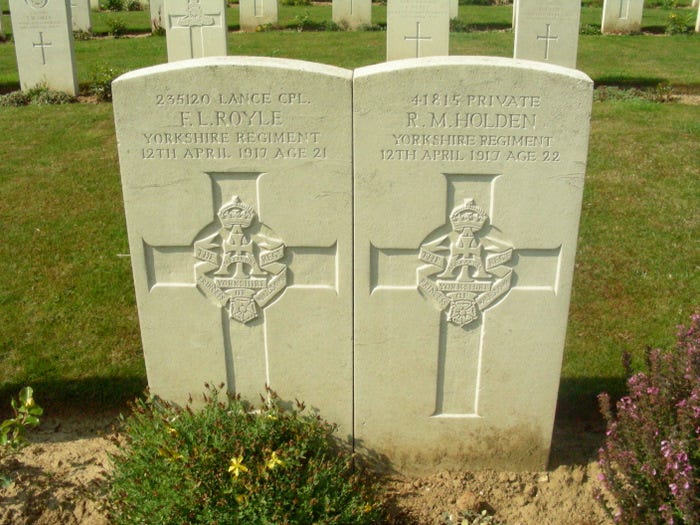
The grave of Frank at Boyelles Communal Cemetery Extension, France. Image courtesy of the International War Graves Project
The Scarborough Cricket Club Committee listed with deep regret the members killed during 1917. Frank Leslie Royal was named among the six men killed and the statement ended: ‘All were well known Scarborough sportsmen and highly esteemed members of the club’.3
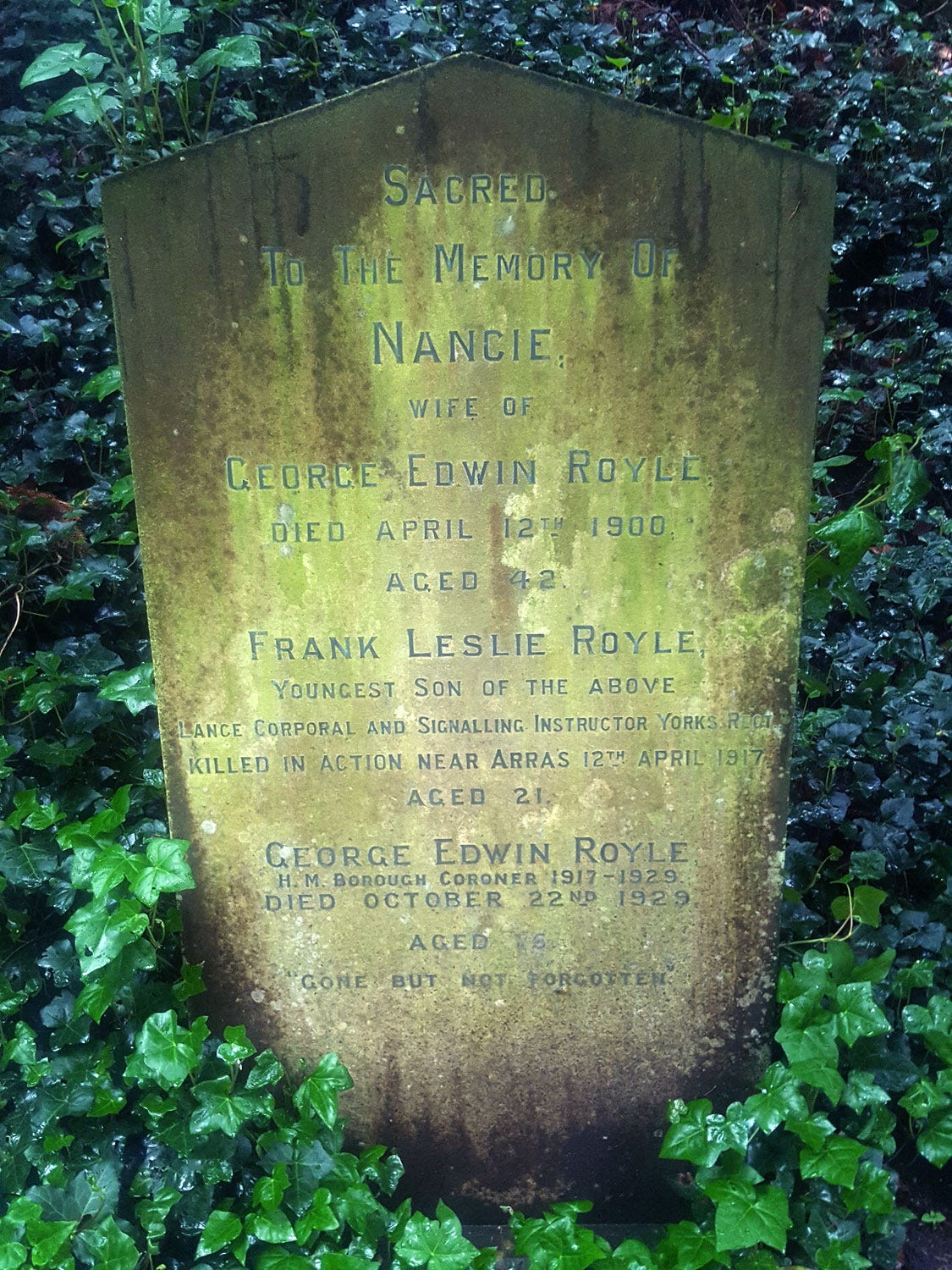
Frank Royle remembered on his family’s grave in Scarborough’s Dean Road Cemetery, photo Wayne Bywater
Sidney Wheater
Tucked away behind Scarborough’s main shopping street, Albermarle Crescent consists of two curves of Victorian terraced houses, which gracefully embrace a central garden.
The focal point is the Albermale Baptist Church, designed in a Gothic Revival style by the renowned architect, Henry Lockwood; he is best remembered for the architectural partnership Lockwood and Mawson, who designed three iconic buildings in the city of Bradford: St George’s Hall (1851-2), the Wool Exchange (1864-7), and the Town Hall (1869–73). Lockwood also laid out and designed the mill, model village and church at Saltaire (1851–76). One of the main subscribers for the erection of Albemarle Baptist Church was none other than Titus Salt, which explains Lockwood’s appointment to design the church.
Sidney Wheater was born on 10 January 1888 at 33 Albemarle Crescent, Scarborough. Just two doors on from the Baptist Church. His father was a schoolmaster, who ran a private school on Albemarle Crescent, known variously as ‘Wheater’s Academy’, ‘Wheater’s, ‘Grammar’ School’, and finally ‘Jimmy’s’, an establishment which for over forty years had one of the highest reputations in Scarborough and the surrounding district.4
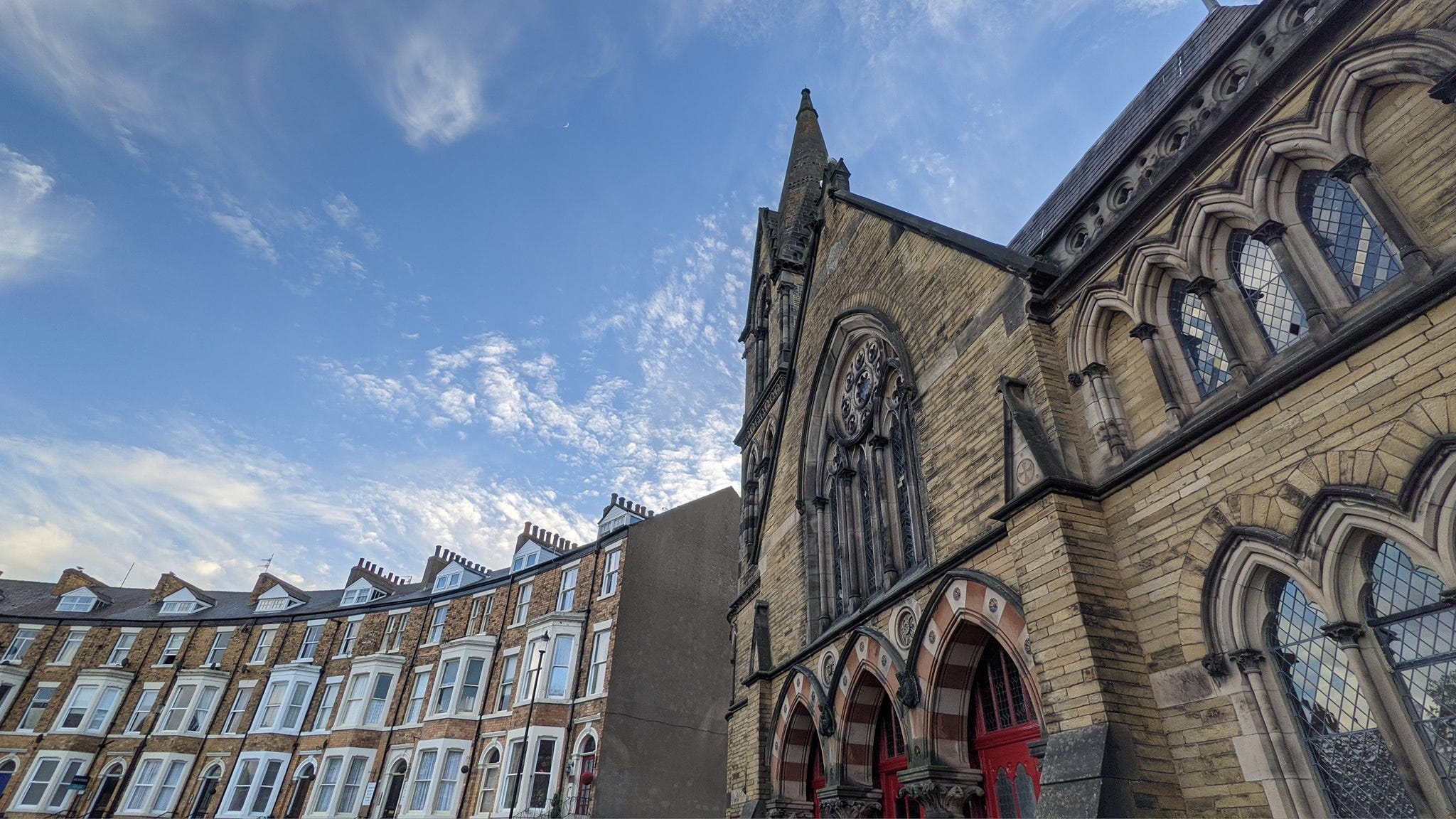
Albemarle Baptist Church, number 33 is the third bay window along the Crescent
Sidney had clearly caught the sporting bug from his father, as Matthew Wheater had been a player and latterly chairman of Scarborough Cricket Club. His Hunmanby-born brother, Charles Wheater, played in two Yorkshire County Cricket Club matches at the Scarborough Cricket Festival in 1880, against I Zingari and the Marylebone Cricket Club (MCC).5 Sadly, Charles suffered from complex medical problems and died at Scarborough in 1885, aged just twenty-five.6
Perhaps unsurprisingly, Sidney excelled at sport, he was fleet of foot, an advantage he utilised to the full playing football for his father’s school, hockey for Scarborough and Yorkshire and, of course, cricket for Scarborough Cricket Club.
Sidney’s father Matthew Wheater, died on 15 January 1901 and was buried at Dean Road Cemetery. In the wake of his father’s death, his mother, Bradford-born Hannah, found employment as a schoolmistress at Wimpole Schoolhouse in Cambridgeshire. The twenty-three year old Sidney moved south with his mother, leaving his older brother to continue running the Scarborough school until its closure in the summer of 1915.
When war came in 1914, Sidney was quick to join the colours, by early 1915 it was reported that he had been promoted to the rank of captain and was serving with the 24th Middlesex Regiment. He was expecting to be sent to the front at short notice.7 The regiment duly landed at Le Havre on 11 March 1915. Throughout 1915 they in the thick of the action, fighting at the battles of Aubers Ridge and Festurbert. In July 1915 it was reported that Sidney had received a wound to his arm whilst in action.8 The regiment’s last major offensive of 1915 came at Givenchy as part of the infamous Battle of Loos.
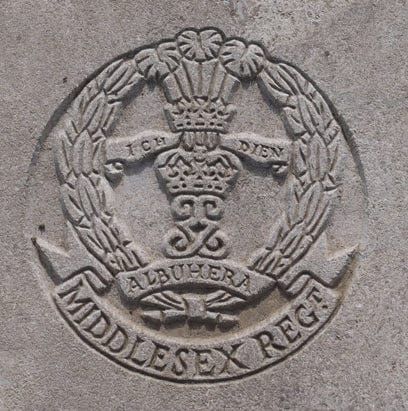
The following Autumn the regiment was transferred to the Somme region to continue the offensive known to history as the Battle of the Somme, which had commenced with enormous loss of the life on 1 July 1916; a date that is still indelibly etched into the collective memory of Britain.
On 15 September 1916, Sidney’s regiment found themselves at High Wood, the scene of savage fighting for several months, the wood eventually fell to the British on the same day that Sidney’s battalion arrived. They were tasked with taking German positions beyond the wood, known as the Starfish Line. The battalion found themselves pinned down in no man’s land under heavy machine gun fire. They dug in just 200 yards short of their objective. The attack had claimed 4,500 men dead and wounded. Among that number was Captain Sidney Wheater. In the pulverised hell of no man’s land, his body was never found. He disappeared, like thousands of others, into the mud of the Somme, near continuous heavy shellfire and shifting lines, ground the dead into the mud. Sidney may be buried in an unmarked grave, around 53,400 are marked as ‘Known Unto God’ in the Somme region, or he may lie to this day beneath the undulating chalk fields.9 His name appears in stone amongst the 72,000 on the Thiepval Memorial to the Missing. He was just twenty-eight years of age.10
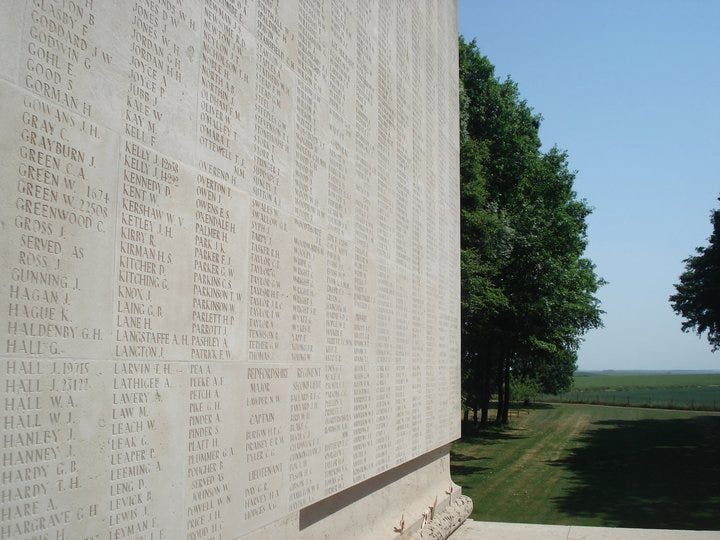
A section of the 72,000 names on the Thiepval Memorial to the Missing
At Scarborough Cricket Club’s annual meeting in December 1916, it was noted with regret that five club members had made the ultimate sacrifice. Sidney’s name headed the list of those who had lost their lives.11 Sidney’s name also appears on his father’s grave in Dean Road Cemetery. His mother was subsequently buried there on 21 December 1921.
Scarborough Mercury, 27 Apr. 1917
Scarborough Mercury, 4 May 1917
Scarborough Mercury, 7 Dec. 1917
‘High Wood on the Somme’, Scarborough Maritime Heritage Centre
David Warner, The Yorkshire County Cricket Club: 2011 Yearbook (113th ed.), (Ilkley, Great Northern Books, 2011), 381
‘Delving through the archives of Yorkshire CCC’, Yorkshire Post, 21 Dec. 2018; Paul Dyson, Who’s Who of the Yorkshire County Cricket Club, (Bradford: Great Northern Books, 2018)
Scarborough Mercury, 2 Feb. 1915
Scarborough Mercury, 23 July 1915
John Nichol, The Unknown Warrior: A Personal Journey of Discovery and Remembrance, (Simon & Schuster, 2024)
‘Captain Sidney Wheater’, Commonwealth War Graves Commission
Scarborough Mercury, 8 Dec. 1916